The Future of AI in Web Design
How artificial intelligence is reshaping the way we build digital experiences.
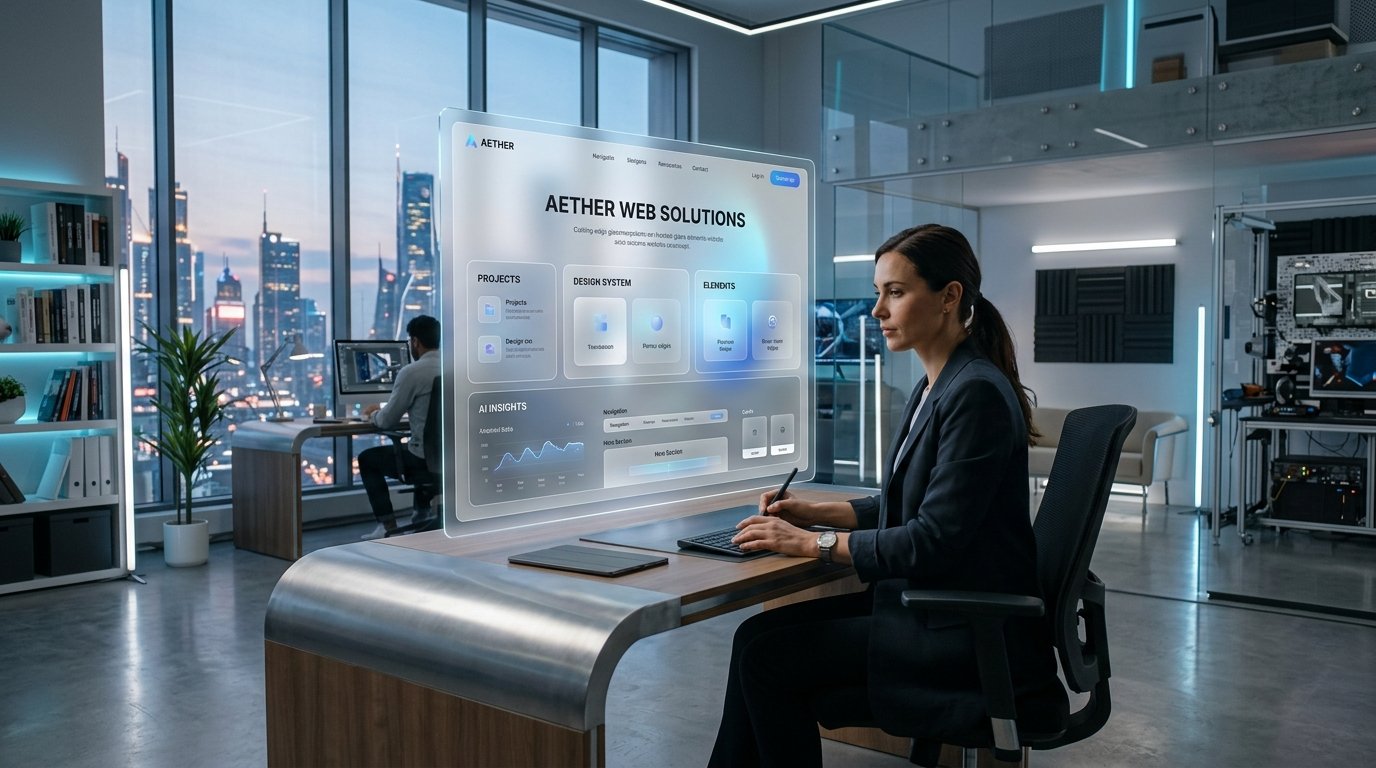
The days of static, one-size-fits-all websites are rapidly coming to an end. We are entering an era where artificial intelligence isn't just a gimmick—it's a foundational tool fundamentally reshaping how we build, deploy, and interact with digital experiences. From automating repetitive coding tasks to generating hyper-personalized user interfaces on the fly, AI is empowering agencies and developers to push the boundaries of creativity and efficiency.
1. Generative UI: Designing Beyond the Grid. Historically, designers spent hours perfecting wireframes and testing color palettes. Today, AI-driven design tools can instantly generate high-fidelity layouts based on text prompts. We are seeing a massive shift toward dynamic aesthetics. AI easily adapts to modern design trends, seamlessly generating elements like "antigravity" glassmorphism, frosted glass effects, and cinematic lighting. Imagine feeding an AI a prompt for a clean, professional light-themed interface built on a soft gray background with glowing blue gradients—within seconds, it provides a pixel-perfect starting point that perfectly captures that modern, premium feel.
2. Streamlining the Full-Stack Workflow AI's impact goes far beyond the visual layer; it's accelerating the entire development lifecycle. For modern applications—especially those utilizing robust architectures like the MERN stack (MongoDB, Express.js, React, Node.js)—AI coding assistants are becoming indispensable. Intelligent Code Generation: AI can instantly write boilerplate code, generate Mongoose schemas based on natural language descriptions, or scaffold complex React components.Real-Time Debugging: Machine learning algorithms can spot vulnerabilities and logic errors before the code is even pushed to production.Automated SEO and Sitemaps: AI tools can analyze a site's structure to automatically generate optimized meta tags, XML sitemaps, and gig titles tailored for maximum organic reach.
3. Hyper-Personalized User Experiences (UX)The future of web design is contextual. AI allows websites to act as living entities that adapt to the individual user in real-time. By analyzing user behavior, browsing history, and interaction patterns, AI can dynamically adjust the layout, content, and even the visual theme. If a user prefers high-contrast layouts or specific navigation structures, the site can physically reorganize itself to provide the most intuitive experience possible, drastically improving conversion rates and user retention.
4. Bridging the Gap Between Concept and Deployment. Perhaps the most exciting aspect of AI in web design is how it collapses the timeline between an idea and a live product. Rapid prototyping is now truly rapid. Agencies can iterate through dozens of visual concepts—from dark, neon-heavy cyberpunk themes to ultra-minimalist, light-mode corporate architectures—in the time it previously took to draft a single mockup.
Verdict:
Artificial intelligence will not replace human designers and developers; it will elevate them. By offloading the tedious, repetitive aspects of web creation, AI frees us to focus on what truly matters: strategy, user psychology, and crafting digital experiences that leave a lasting impact. The agencies that embrace these tools today will be the ones defining the web of tomorrow.
Ready to bring your digital presence into the future? Let's build something extraordinary together.