
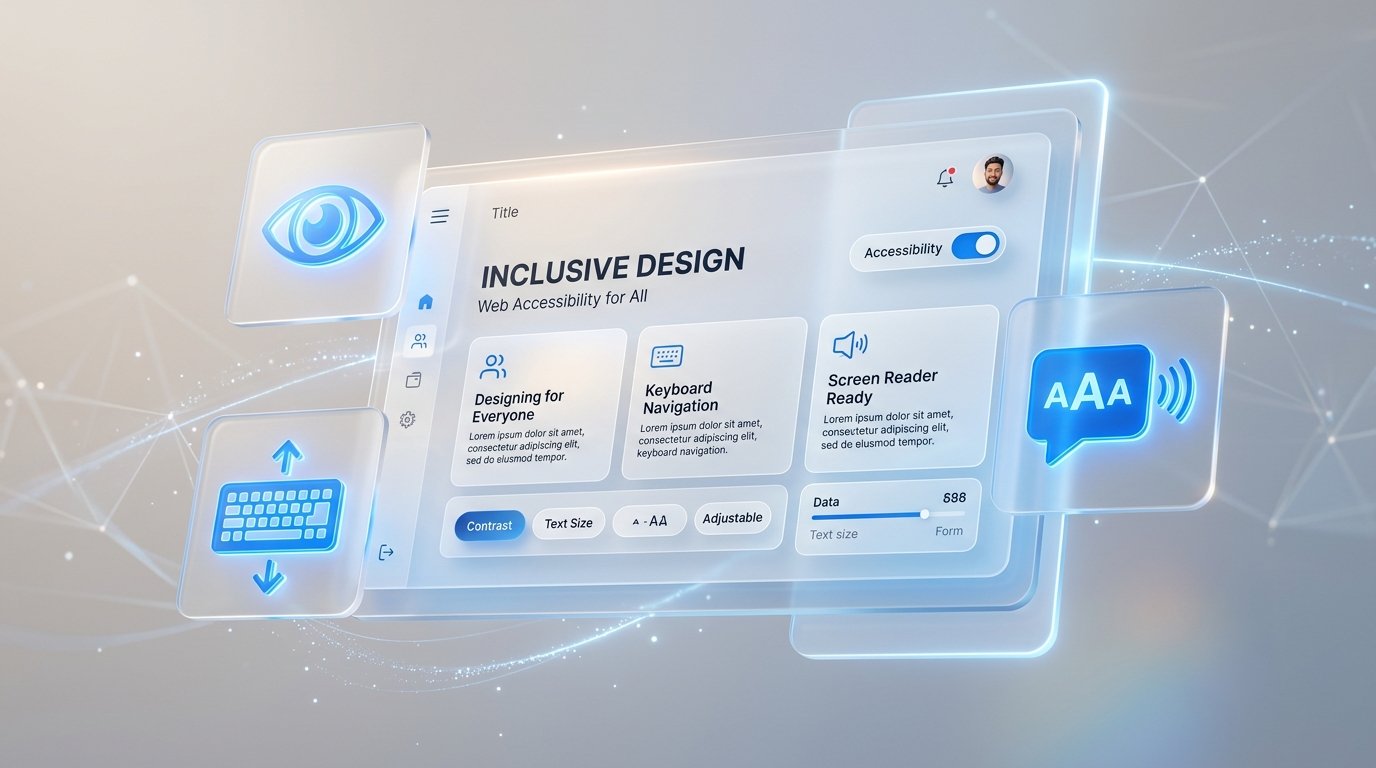
The internet was built on the promise of universal access, yet millions of users still face barriers when navigating the web. Designing for accessibility—ensuring that people with visual, auditory, motor, or cognitive disabilities can seamlessly use your site—has shifted from being a "nice-to-have" feature to an absolute necessity.
Inclusive design is no longer just about compliance; it is a fundamental pillar of user experience (UX) and modern web development. Here is why prioritizing accessibility is critical for the future of digital experiences.
1. The Business and SEO Advantages
Accessibility isn't just a moral imperative; it is a massive business opportunity. According to the WHO, over 1 billion people globally live with some form of disability. If your website isn't accessible, you are actively turning away a significant portion of your potential audience.
Furthermore, accessible design directly boosts your Search Engine Optimization (SEO). Search engines like Google prioritize websites that provide excellent user experiences. The technical foundations of accessibility—such as semantic HTML, descriptive alt text for images, and clear site architectures—are exactly what search engine crawlers look for when indexing and ranking your pages.
2. Balancing High-End Aesthetics with Accessibility
There is a persistent, outdated myth that accessible websites must be visually boring. In reality, you can absolutely achieve premium, cutting-edge aesthetics while remaining fully compliant with Web Content Accessibility Guidelines (WCAG).
You don't have to abandon modern trends like "antigravity" glassmorphism or frosted glass effects. The secret lies in execution. For example, if your brand identity revolves around a sleek, light-themed interface utilizing a soft gray gradient background with glowing blue accents, you can still achieve this look inclusively. You just need to ensure that the glowing blue text maintains a strict, high contrast ratio against the gray background so that users with visual impairments can read the content without strain. It’s about merging cinematic, high-resolution design with functional clarity.
3. Technical Implementation in Modern Development
Accessibility cannot be an afterthought bolted onto a finished project; it must be woven into the very fabric of your code.
When building robust, full-stack applications—especially dynamic platforms utilizing the MERN stack (MongoDB, Express.js, React, Node.js)—developers must adopt an accessibility-first mindset:
Semantic HTML: Using proper header hierarchies (H1, H2, H3) and native HTML5 elements (like <nav>, <main>, and <button>) gives screen readers the context they need to navigate the page logically.
Accessible React Components: In environments like React, it is crucial to use Fragments (<>...</>) to avoid breaking the semantic structure of the DOM, and to rigorously apply ARIA (Accessible Rich Internet Applications) attributes to any custom interactive components.
Keyboard Navigation: Every action a user can take with a mouse—from submitting a contact form to filtering a complex project grid—must be fully operable using only the "Tab" and "Enter" keys.
The Verdict
Inclusive design is the hallmark of a mature, forward-thinking digital agency. When we design for the extremes, we create better, smoother, and more intuitive experiences for everyone. Accessibility ensures that your message, your services, and your digital footprint are truly universal.
Does your website meet modern accessibility standards? Let our team help you build an inclusive digital platform that welcomes every user.